|
|
|
|
portfolio |
 |
 Deep in the Deep in the
Heart of Texas
 Branded with an outdated image, the state of Texas goes on the road to rustle tourists — and rounds up close to 111,000 prospects.
Texas has suffered from a poor public image ever since Civil War general Phil Sheridan branded the Lone Star State with his vow that “If I owned Texas and Hell, I would rent Texas and live in Hell.” Today, many still view the state of 24 million as a cowboy-hat-wearing, tobacco-spitting dustbowl.
Still, despite that yee-haw image, tourism in Texas generated more than 1 million jobs in 2007, and accounted for $56.7 billion of spending that year alone. Texas is, in fact, one of the most tourism-dependent states in the nation, with only oil and gas production and related manufacturing having a more profound impact on
its economy.
But with the Travel Industry Association predicting that the hospitality industry in the United States will take an overall 1.3-percent skid in 2009, that also meant Texas could suffer a crippling decline in a faltering economy if the tourist trade dried up like a tapped oil well. If it wanted to keep the tourists streaming in, the Texas Office of the Governor, Economic Development and Tourism (EDT) knew it had to dig in its spurs and bolster its efforts.
 To delete clichéd Texpectations from prospective tourists’ mental caches, the EDT turned to T:M Advertising Inc. of Dallas, and Alexandria, VA-based RedPeg Marketing Inc. “How do you communicate the history and beauty of Texas to someone who might think it’s all cowboys and dust?” asks Mercedita Roxas-Murray, a vice-president at RedPeg. “How do you elicit that ‘Wow, I had no idea that was in Texas’ reaction?”
The EDT’s surveys had shown that once visitors experienced the range of attractions in Texas, their preconceptions vanished. So the best way to change peoples’ perceptions about the Lone Star State was to let them experience it. But short of inviting Americans on all-inclusive, complimentary Texas adventures, how can you convey the true Texas experience in a tactile, memorable way?
The solution: If you can’t take tourists to Texas, bring Texas to the tourists with a multi-venue road show called Texas on Tour. “We wanted them to see it, feel it, hear it, and make it personal,” Roxas-Murray says. “A road show would allow us to do that better than any other approach.”
Kicking off in Dallas for the 2008 Texas Tourism Week, the tour traveled to 16 venues and events including state fairs and summer festivals nationwide. At each venue, the 53-foot Texas on Tour trailer stood out among the typical festival vendors like a ninja at a renaissance fair.
 After setting up its 80-by-50-foot portable campus, two staffers registered visitors as they entered. Each guest received a scan card embedded with their name and e-mail address that they then scanned before entering each Texas on Tour attraction. That way, the tourism office could pinpoint what each visitor had been most interested in for future follow-ups. After setting up its 80-by-50-foot portable campus, two staffers registered visitors as they entered. Each guest received a scan card embedded with their name and e-mail address that they then scanned before entering each Texas on Tour attraction. That way, the tourism office could pinpoint what each visitor had been most interested in for future follow-ups.
Serenaded by up-and-coming Texas musicians and entertained by trick ropers, the visitors’ first stop was the Western Dome, a 30-foot-diameter inflatable purple bubble. Inside, guests were transported to the Texas of “Lonesome Dove” and the Chisholm Trail — a mini-meadow of log benches, cacti, stuffed armadillos, bluebells, and the unmistakable tang of mesquite in the air. Then the lights dimmed and the stars in the simulated sky above began to twinkle.
A holographic cowboy in a red kerchief appeared on the wall to regale the crowds with stories of Texas’ fabled past, then sang a plaintive tune around a virtual campfire, all while images of Texas, from scenic lakes to the mountain woods, floated past.
After the dome, the next attraction, Ride the Waterways of Texas, offered four virtual-kayak simulators whose sole function was to douse the notion of Texas as a bone-dry desert decorated with cow skulls and buzzards. Visitors climbed into the single-seat kayaks and donned a pair of virtual-reality goggles, whisking into another world of churning Texas waterways. While the kayaks bounced and bobbed like a bucking bronco for seven minutes through Big Bend Country canyons, Lady Bird Lake, and the rolling waves of the Gulf of Mexico, the goggles gave riders a 360-degree view of scenery.
 Guests next visited the Green Screen Photo Experience and Stroll Along the Texas Coast attractions, where, standing in front of a green screen, they could view themselves on a flatscreen monitor superimposed in front of a beach scene — beach balls included. Then they strolled over to Picture Yourself in Texas, a separate room where attendees could pose against motion-picture backdrops of Texas scenes such as the Alamo, SeaWorld, skylines of a Texas megalopolis, or NASA. Staffers photographed the visitors as they blended into the diverse backgrounds holding a miscellany of props. A link to download the photos was sent via e-mail to attendees. Guests next visited the Green Screen Photo Experience and Stroll Along the Texas Coast attractions, where, standing in front of a green screen, they could view themselves on a flatscreen monitor superimposed in front of a beach scene — beach balls included. Then they strolled over to Picture Yourself in Texas, a separate room where attendees could pose against motion-picture backdrops of Texas scenes such as the Alamo, SeaWorld, skylines of a Texas megalopolis, or NASA. Staffers photographed the visitors as they blended into the diverse backgrounds holding a miscellany of props. A link to download the photos was sent via e-mail to attendees.
Staffers corralled approximately 20 to 25 visitors each day to ask what they liked and disliked, while steering them to kiosk monitors for a game of “Texas or Not,” which quizzed how well participants knew their texarcana.
Within a few days, those who had their card scanned received an e-mail thanking them for attending, along with links to the information on the tour they had shown an interest in and a reminder to pick up their green-screen photos at TravelTex.com.
While the EDT had no real baseline to gauge its first-time mobile event, the results were huge, even by Texas standards. Along with the trailer itself generating 6.9 million impressions and the media coverage of the tour adding 3.3 million more, 111,000 people attended the tour, spending 10 to 60 minutes each. Fifty-five percent of e-mail recipients opened them, with 37 percent clicking through to at least one of the Texas-related links. Overall, 79 percent of visitors to the Texas on Tour experience reported they were interested in planning a vacation there, meaning the mobile event successfully brought its prospects’ psyches deep into the heart of Texas.
 Is There a Doctor Is There a Doctor
in the House?
 ArthroCare Corp. draws 900 doctors to its medicine show by prescribing an operating room on wheels that increases the number of time-starved surgeons testing its technologies. ArthroCare Corp. draws 900 doctors to its medicine show by prescribing an operating room on wheels that increases the number of time-starved surgeons testing its technologies.
“Time is generally the best doctor,” the ancient Roman poet Ovid wrote. The hours and days of our lives may indeed be a physician’s most powerful cure, but time is also a remedy they rarely prescribe for themselves.
In fact, it’s an ailment even the best marketing efforts of ArthroCare Corp. couldn’t quite cure. The Austin, TX-based maker of surgical instruments used in soft-tissue surgery may have generated $319 million in 2007 sales, but its success hinges on how well it reaches a market — the nation’s 17,486 orthopedic surgeons — that treats traditional marketing with disdain.
“Selling to orthopedic surgeons is not like selling software,” says Bridgette Birdie, director of marketing communications and marketing events for ArthroCare. “Our salespeople constantly communicate with doctors and build a relationship with them over time, so that we know what tools they’re currently using, and what technology they would be interested in trying.” The surgeons also tend to ignore conventional promotions because they need to try out a technology firsthand to see for themselves how well it works in real life. But with orthopedic surgeons working a median of 60 hours a week, with a median of 103 patient visits per week, according to the American Academy of Orthopaedic Surgeons, spare time is a rare condition.
 To give these busy docs the hands-on time they need to trust a new technology, ArthroCare had tried a strategy of renting out orthopedic training labs around the country for one- to three-day national or regional events. It invited doctors who, with travel time included, had to take up to three days away from their overclocked practices to attend the events. Attendance was, by the company’s own definition, high: Eight to 12 surgeons typically attended the one-day regionals, while 40 to 50 showed for the national events. “The events were effective, but the most common concern was that the doctors disliked how long they had to be gone from their practices,” Birdie says. For ArthroCare, it was time to find some effective alternative medicine. To give these busy docs the hands-on time they need to trust a new technology, ArthroCare had tried a strategy of renting out orthopedic training labs around the country for one- to three-day national or regional events. It invited doctors who, with travel time included, had to take up to three days away from their overclocked practices to attend the events. Attendance was, by the company’s own definition, high: Eight to 12 surgeons typically attended the one-day regionals, while 40 to 50 showed for the national events. “The events were effective, but the most common concern was that the doctors disliked how long they had to be gone from their practices,” Birdie says. For ArthroCare, it was time to find some effective alternative medicine.
That’s when it decided on a strategy that was as simple and as effective as Dr. Ignaz Semmelweis’ recommendation in the 19th century that doctors wash their hands to stem the spread of germs: a mobile surgical lab that would go to the surgeons instead of making the doctors come to them.
Birdie knew the strategy could allow ArthroCare to simplify a months-long sales process by bringing its products to its orthopedic-surgeon customers. It would also offer something intangible to the doctors: r-e-s-p-e-c-t. “Going straight to the surgeons sends the message that ArthroCare values their time,” Birdie says.
Aimed at orthopedic surgeons who specialize in sports-medicine operations, the 59-foot trailer, developed by Morgan Hill, CA-based Cyclonix Inc., contained five operating stations for surgical training and physician education. Each station was large enough for two surgeons and one assistant, and offered monitors so a doctor could watch a fiber-optic feed from inside the body part they operated on. Over a nine-month period, from February to November, it would visit all seven of ArthroCare’s sales regions, stopping at nearly 90 hospitals and surgery centers across the nation.
 ArthroCare had the hi-tech mobile lab, but now it needed to get the surgeons’ attention. Surgeons, in its experience, relied on face-
to-face interaction with sales reps. Each sales region
promoted the lab however
it felt best for its market,
often inviting surgeons via personal phone calls. Some reps started promoting months in advance while others waited until their region’s event approached. ArthroCare had the hi-tech mobile lab, but now it needed to get the surgeons’ attention. Surgeons, in its experience, relied on face-
to-face interaction with sales reps. Each sales region
promoted the lab however
it felt best for its market,
often inviting surgeons via personal phone calls. Some reps started promoting months in advance while others waited until their region’s event approached.
Setting up in each
hospital’s parking lot, the Mobile Surgical Skills Center generally remained open for about four to six hours, and surgeons could simply walk in any time. Once the doctors arrived, they pulled on surgical gloves and went to work. Each of the stations in the lab was equipped with ArthroCare instruments, while one of the operating areas served as a teaching station, broadcasting the operation taking place to a monitor positioned on the outside of the mobile lab.
By November, when the tour had completed its scheduled 87 stops, 900 surgeons had used the Mobile Surgical Skills Center. ArthroCare had hoped to engage five doctors at each stop — it met the goal virtually 100 percent of the time. The diagnosis of the tour was so positive that the company sent it on another round to a similar number of stops. For ArthroCare, when it comes to reaching its time-strained demographic, a mobile tour can make sure the doctor — and the customer — is always in.
 Putting the Right Putting the Right
Fit Forward
 When Gap Inc. wanted more media attention for its line of GapBody bras, it busted out with a road show that took a hands-on approach — and grabbed 1.4 billion media impressions. When Gap Inc. wanted more media attention for its line of GapBody bras, it busted out with a road show that took a hands-on approach — and grabbed 1.4 billion media impressions.
In the golden age of department stores from the 19th to the mid-20th century, legendary emporiums like Gimbel’s, Bamberger’s, and Hudson’s offered a degree of services that embraced their rival Marshall Field’s motto, “Give the Lady What She Wants,” especially when it came to brassieres. Whether they were shopping for padded, push-up, or peephole bras, women could find the exact size they needed with the guiding hands of sales staff that populated those curios of consumerism.
Today, stores like Gap Inc. have supplanted Gimbel’s and Marshall Field’s in popular culture and commerce. But what hasn’t changed is the need for personal service when it comes to personal items, like bras — something Filene’s found out in 1950, when it tried to sell unmentionables through its “U-Serv-U” vending machines. So in 2005, when Gap wanted to reach more 18- to 35-year-old women to increase their awareness of its GapBody lingerie line, the San Francisco-based clothing retailer hit the road to alert women to a burning and widespread issue that would allow it to differentiate itself from its competition: finding the right fit.
Ever since the very first push-up brassiere with separated cups was patented
in 1893, there have
been almost as many types of bras as there have been women
to wear them.
 By 1918, there
were at least 52
brassiere brands on the market, and later in the century they came with provocative names like Nephretiri, Cleopatra, and Cinnamon-Dessert. Some manufacturers looked to the animal kingdom, churning out bras trimmed with
exotic furs such as ocelot and black broadtail. By 1918, there
were at least 52
brassiere brands on the market, and later in the century they came with provocative names like Nephretiri, Cleopatra, and Cinnamon-Dessert. Some manufacturers looked to the animal kingdom, churning out bras trimmed with
exotic furs such as ocelot and black broadtail.
Others were inspired by the space-age frontier like Très Sècrete’s inflatable brassiere that came with its own plastic straw for blowing it up to augment your plumage. But no matter what name they sold under or whether they were made from fur-bearing mammals or plastic polymers, their cups ranneth over with a double-D size shortcoming: Most women didn’t — and still don’t — know how to buy a bra that fits them correctly.
The problem came to a head on a May 2005 episode of “Oprah,” when the talk-show host and cultural czarina informed American women that 85 percent of them buy the wrong size bra. Even though cup sizing had been around since 1931, that still meant approximately 112 million out of about 132 million bra-buying women — whose bra size typically changes an average of six to eight times over a lifetime — hadn’t been keeping themselves abreast of their bra-buying needs.
It was also a huge opportunity for Gap to market its own line of lingerie. But how do you effectively reach out and touch your target for what is literally a hands-on job? Traditional media, including television, radio, newspapers, and even interactive Web sites, were too limited and impersonal for such an intimate topic. That’s when Gap and A Squared Group Inc.,
a Los Angeles-based experiential marketing
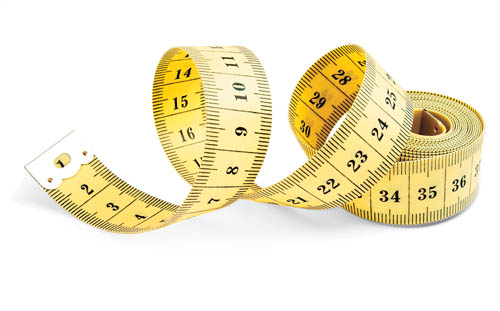
company, formulated a strategy that would lift and separate the retailer from its competitors: a traveling road show with a comfortable environment and personnel trained to help women find the bra that fit them correctly. It was an idea as old-fashioned as the corset, harking back to the days when staff in department stores ruled the earth and routinely measured women on site to find the correct size for them.
 Gap and A Squared Group Inc. outfitted a 59-foot trailer with a custom-designed lounge and sent it on a seven-city tour of 40 malls with GapBody outlets. Naming it the GapBody Bra Bar, Gap launched it in San Francisco, after which it motored on to Los Angeles, Denver, Chicago, Boston, and Miami, before finishing in New York — all major metro areas with heavily trafficked malls that could generate high attendee volume and substantial Gap and A Squared Group Inc. outfitted a 59-foot trailer with a custom-designed lounge and sent it on a seven-city tour of 40 malls with GapBody outlets. Naming it the GapBody Bra Bar, Gap launched it in San Francisco, after which it motored on to Los Angeles, Denver, Chicago, Boston, and Miami, before finishing in New York — all major metro areas with heavily trafficked malls that could generate high attendee volume and substantial
media coverage.
Gap primed stores on
the tour schedule by supplying them with promotional fliers to pass out to customers about two weeks before the lounge arrived. It also added a page on its Web site with all the Bra Bar tour details.
 At each tour stop, the Bra Bar set up inside the mall and opened its doors for 8 to 10 hours. Inside a lounge configurable in three different sizes, from 10-by-12-feet to 15-by-24-feet, visitors encountered a cross between a Sephora outlet and the set of “Sex and the City:” smooth hardwood floors, white curtains, a bubble-pink-vinyl seating area, a floral arrangement as sweet as a Laura Ashley ensemble, stacks of fashion books, and comfortable lilac-colored ottomans. At each tour stop, the Bra Bar set up inside the mall and opened its doors for 8 to 10 hours. Inside a lounge configurable in three different sizes, from 10-by-12-feet to 15-by-24-feet, visitors encountered a cross between a Sephora outlet and the set of “Sex and the City:” smooth hardwood floors, white curtains, a bubble-pink-vinyl seating area, a floral arrangement as sweet as a Laura Ashley ensemble, stacks of fashion books, and comfortable lilac-colored ottomans.
Behind the posh seating area ran a 15-foot-wide bar. Here, visitors sat on Fiberglas stools where two “bra-tenders” — certified bra fitters — invited them to take a short Cosmo-like quiz on one of three laptops positioned on pillbox-shaped counters. After the tongue-in-cheek questionnaire helped the guests determine their “vibe” — effortless, playful, intriguing, or sultry — the bra-tenders consulted with them to determine their correct bra sizes, then suggested which style bra was the best fit for their
personality type.
Helping keep the mood over the unmentionables light, the staff passed out bottles of flavored water as well as branded fortune cookies, which included messages such as, “Your cup runneth over.” Visitors also received a free pair of panties for getting fitted, along with a “Bra Bar V.I.P. Card,” which gave them a 20-percent discount on lingerie at GapBody stores.
Gap and its GapBody outlets received a big bounce from the tour, which fit almost 5,600 women for bras. It didn’t even have to pad the results: Hoping for at least 10 million media impressions, it received 1.4 billion, 140 times its goal, including national and regional coverage on E! News, People magazine, The Boston Globe, and The New York Daily News, which Gap estimates were the equivalent of $1.6 million worth of advertising. Some stores near Bra Bar stops realized as much as a 50-percent jump in weekly sales compared to pre-event sales, while, overall, retail shops on the tour enjoyed a median 3-percent weekly jump in traffic.
Gap extended the tour into 2006 and added eight stops to the Bra Bar’s itinerary, proving that while it was the kind of marketing effort that could quickly go bust, it turned out to be the perfect fit.e
|
|
|
 |
 |