s your attendee quantity or quality declining? Are you experiencing cost overruns or last-minute change orders? Is there internal apathy or frustration about your program? Are you, your staff, or your vendors burned out? s your attendee quantity or quality declining? Are you experiencing cost overruns or last-minute change orders? Is there internal apathy or frustration about your program? Are you, your staff, or your vendors burned out?
If you answered “yes” to one or more of the above, the diagnosis is clear: Your event is in a rut. And any event is susceptible, no matter the age, size, type, or budget.
Most event marketers land in a rut by falling victim to one (or more) of three devilish temptations. Some become victims of their own success as they repeat, over and over again, a model that once brought results, failing to evolve along with the market or cultural environment. Others lose focus on the end game — building awareness, loyalty, or sales — and instead give priority to tracking, and reacting to, what the competition is doing. Still others founder by trying to be all things to all people.
No matter the cause, a stagnant event will eventually corrode not only your company’s credibility, but your own. It can lead to budget scrutiny and woes if you throw good money after bad, continuing to fund an ineffective program. It can wear down your team and vendors, while eroding your internal support. The biggest risk? Allowing a stagnant event to continue can cause long-term damage to your program’s ability to be an effective marketing channel. That’s a bruise that can take a long time to heal.
Methodical Medicine
Climbing out of a rut doesn’t mean trashing all your past hard work and success, leaping onto a wild-n-wooly new approach, and completely starting over. Instead, there are four methodical strategies that, when built into your overall event-planning process, can guide you out of the rut you’re in … or help you avoid one altogether.
1. Engage in a discovery process. If you see an obvious problem — and an obvious solution — to what’s holding your event back, consider yourself lucky. Most of the time, the problem isn’t immediately apparent. In this case, it takes a thorough discovery process to uncover what’s ailing your event.
An effective discovery process can help you accurately troubleshoot problems and uncover what isn’t working, validate what is working, and identify new opportunities that you hadn’t seen before. More important, it can help you confidently relinquish your previous assumptions as you gain a better understanding of internal requirements, external market forces, and the overall industry landscape. All are essential ingredients in a creative event refresh.
But to do this effectively, you need to do more than invite a few team members to brainstorm in a room about ways to improve. To uncover the best information, hold a series of individual interviews with internal and external stakeholders, along with a review of industry resources.
As you develop a list of internal stakeholders to interview, look to your company’s management, colleagues who have led or currently lead other customer programs, distributor and sales networks, business units or product divisions, vendors, and if you’re a global company, your peers in regional offices. Ask them a mix of questions that probe into your event, and into the market in general. What have they heard from your — and their — attendees? What do they know about customers’ hottest issues? What are customers struggling to understand about your company? What other companies are particularly effective at addressing some of the challenges and issues they just mentioned?
Ask customers and partners to weigh in on the same questions. As you conduct each interview, set your mental channel to “receive” mode, invite honest and candid feedback, and avoid any defensive or argumentative responses to what you may hear. It can be hard to hear others criticize something you’ve worked diligently to create. But their unfettered opinions are essential to improvement.
As you evaluate the internal and external feedback, make note of any trends, commonalities, or disconnects. Then supplement the individual perspectives with broader reviews of industry research and briefs on your competitors’ events and any other relatable industry conferences.
Summarize the information, and focus on key areas that have the biggest potential to positively or negatively affect your business and events, and bring it back to your team. Now, when you do get together for that brainstorming session, you’ll start from a commonly understood set of issues and opportunities, along with an unarguable rationale for change — thanks to the third-party feedback and opinions you’ve collected.
 After you’ve identified changes to implement that will bring energy and momentum back to your event, don’t forget to schedule a post-mortem. Get it on the calendar before you leave for the event, and aim to hold it within 14 days of your return. Like any good checkup, a post-mortem is good for every event’s health and vitality. What worked? What didn’t? What needs more time to evolve and resonate with customers? After you’ve identified changes to implement that will bring energy and momentum back to your event, don’t forget to schedule a post-mortem. Get it on the calendar before you leave for the event, and aim to hold it within 14 days of your return. Like any good checkup, a post-mortem is good for every event’s health and vitality. What worked? What didn’t? What needs more time to evolve and resonate with customers?
By taking ownership of a timely post-mortem and publicly communicating the report, you’ll shut down negative commentary and squash the Monday morning quarterbacks.
2. Don’t use logistics as a forcing function for strategy. Does this sound familiar? “Let’s just book the space and then we’ll figure it out.” Once you book the space, the logistics train has left. You’ll end up negotiating yourself into the status quo as the zillion details that need to be addressed now take precedence over developing a sound strategy.
Or how about this goodie: “We’ll fix it next year. We just have to get this done.” This is a green light to landing smack back in the middle of your comfort zone, using the ease of past consensus to avoid the admittedly challenging process of uncovering the innovations that can refresh an event. Remember, continuing with a bad strategy just makes that rut deeper. Strategy delayed is strategy denied.
Have a solid plan before you sign a single contract. If that means postponing your event or holding it on a smaller scale, so be it. You’ll come back stronger when you allow yourself time to think.
3. Always focus on the value to the business and to your customer. At the center of your plan should be a well-defined business need, and how your event will address it. Pleasing internal customers is a fact of corporate life. But your events aren’t, in the end, for your internal customers. Make sure they are always targeted to drive a business objective: awareness, lead generation, thought leadership, or pipeline push.
Consider your event strategy in terms of those business needs. How can and should it add business and attendee value? Then assess every event element against its contribution toward this goal. This focused analysis will give you new, objective perspective on each event component. In some cases, this analysis may tell you it’s time to dump an element or two. That pre-event incentive that, while extremely clever and a good brand positioner, isn’t helping your registration cause? Drop it and reallocate those funds. Have a keynoter who, while well known and inspirational, isn’t adding to a thought-leadership halo effect for your brand? Replace her with someone better aligned to your message.
You’ll not only unlock new ways of thinking about your event elements that can help you creatively refresh them, you can also find better, more productive ways to use your budget.
4. Harness the power of your village. Your extended team can be a tremendous well of knowledge. But very often, in an attempt to minimize “noise,” particularly when exploring new directions for an event, we limit team involvement or input in the interest of staying focused and on course.
In reality, shutting people out of your planning process can actually bog down effective decision making, isolating your event from those who have unique information or expertise that can bring fresh air to your program and help you climb out of or avoid a rut. When you invite input early, you reduce the late requests — and second guessing — that protectionist planning breeds.
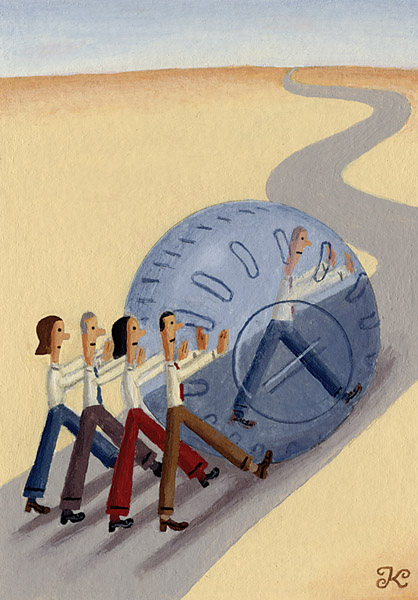
 But, if you’re inviting a village to your table, you need clear definitions of how each person may contribute and who makes the final decision to avoid the nightmare of decision-making by committee. The best time to identify final decision makers is before you start planning your next event, not when under deadline pressure. But, if you’re inviting a village to your table, you need clear definitions of how each person may contribute and who makes the final decision to avoid the nightmare of decision-making by committee. The best time to identify final decision makers is before you start planning your next event, not when under deadline pressure.
For each event there are four essential team roles to be filled:
Project Managers. PMs lead the decision process, framing what the team needs to accomplish and how. They are responsible for speed and efficiency. PMs ensure the right people are involved in the process, that communication flows, and that deadlines are set and met.
Final Decision Makers. They are responsible for program quality and ensuring a commitment to execution. Decision makers identify and communicate decision criteria, especially any non-negotiables.
Subject-Matter Experts. SMEs provide input as you move toward decisions about your event strategy. Representing virtually any department or team within your company that stands to benefit from your event work, SMEs offer insight and expertise, and make recommendations to the decision maker. But here is an important distinction: SMEs have a voice in your process — but not a vote.
Implementers. These staffers are informed after a decision has been made. They typically have a role in executing or supporting the decision, and need to know and understand what was decided and why.
When you’re assessing an event that is “stuck,” many people will want to have a voice in how you evolve the event strategy to get it back on track. With clear role definition, you can give those stakeholders a voice, while making it very clear who holds the votes. The result? Decisions that stick with minimal churning and revisiting.
Roles may vary from event to event, from objective to objective, or from year to year. The important thing is to collaboratively define the roles and stick to them.
Change Agent
No matter how in need of a refresh your event may be, change can be difficult for a team. As Thomas Edison said, “… discontent is merely the first necessity of progress.”
You can smooth the waters by educating your extended team about your work with the four strategies: report on the discovery process and the identified outcomes, explain how those outcomes align with your company’s business objectives and inform your event objectives, specify when and how you will implement new strategies from what you’ve learned, and define what each team member’s role will be.
It’s also important to remember that every event rut is different — even within the same company or division — and every event will find its own unique solution to climbing out of that rut. But by using the four strategies described here, you’ll be well on your way to finding your own unique path to re-energized stakeholders, events, and — most importantly — results. e
|